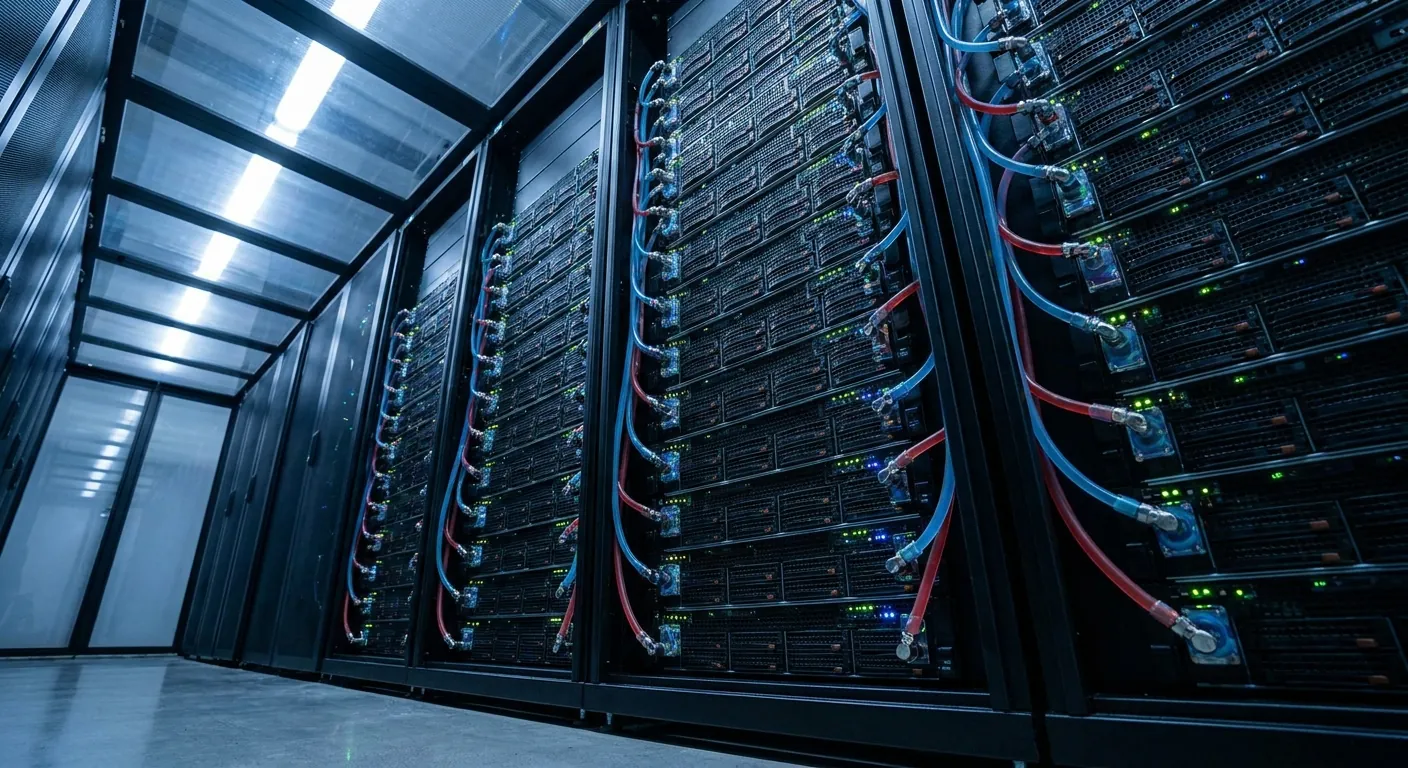
If you own your GPUs, renting the building around them is the cheapest decision you'll make.
AI teams that buy their own hardware face a second decision right after the purchase order: where does it run? The default answer used to be GPU cloud. For sustained training and inference workloads, that default is getting expensive fast.
GPU colocation means you deploy and own your compute, and the operator delivers everything around it: power, white space, liquid cooling, network and 24/7 operations, under a long-term hosting agreement. No hourly billing, no depreciation baked into someone else's margin, no availability lottery on popular instance types.
The economics, in one comparison
Renting a top-tier GPU in the cloud costs a multiple of what the same accelerator costs to run in colocation once utilization is high and sustained. The crossover point comes early: teams running clusters at high utilization for more than a year are usually better off owning the hardware and colocating it. The cloud premium buys flexibility you may not need for a training cluster that runs around the clock.
What drives the colocation cost down is almost entirely energy and cooling. That's why location decides the economics:
Every point of PUE is pure waste: a facility at 1.5 spends 50% of your IT load on overhead, a facility at 1.1 spends 10%. Combine a low PUE with fixed-price hydro power and the total cost per GPU-hour drops well below both cloud rates and colocation in mainland Europe. The full picture is in our Nordic colocation buyer's guide.
What to ask a colocation provider before you sign
Not all colocation is AI-ready. Racks designed for 10 kW enterprise IT cannot take a liquid-cooled GPU pod. The questions that separate real capacity from brochures:
Power. Is the grid interconnection contracted, or "in application"? Connection queues in the Nordics now run four to six years for new entrants, so a provider without signed grid capacity is selling you a place in line.
Density and cooling. What per-rack design load is the white space engineered for? Current-generation AI racks need 120-150 kW with direct liquid cooling; next generations go beyond.
Energy price structure. Spot-indexed power exposes your training budget to market volatility. Fixed-price structures make the cost line predictable for the life of the contract.
Operations. Who does the physical work? Remote hands, monitoring, SLA-backed response times, and whether the operator runs hardware of its own in the same halls.
Where Pure Core fits
Pure Core operates GPU-ready colocation in the Nordics: liquid-cooled data halls engineered for 150 kW racks, 100% hydroelectric power under fixed-price structures, and grid interconnection already contracted on our first site. First capacity is targeted for Q1 2027, and design partnerships start now. You bring the compute; we own and run the infrastructure layer.
Quick answers
Is GPU colocation cheaper than GPU cloud?
For sustained, high-utilization workloads, yes, and the crossover usually lands within the first year. The cloud premium buys elasticity; a training cluster running around the clock doesn't need it.
What rack density do I need for current AI hardware?
Plan for 120-150 kW per rack with direct liquid cooling. Facilities built for 10-15 kW enterprise racks can't take modern GPU pods without a redesign.
What should I check before signing a colocation agreement?
Four things: contracted grid capacity (not "in application"), per-rack design load, energy price structure (fixed beats spot-indexed for budgeting), and who physically operates the hall.